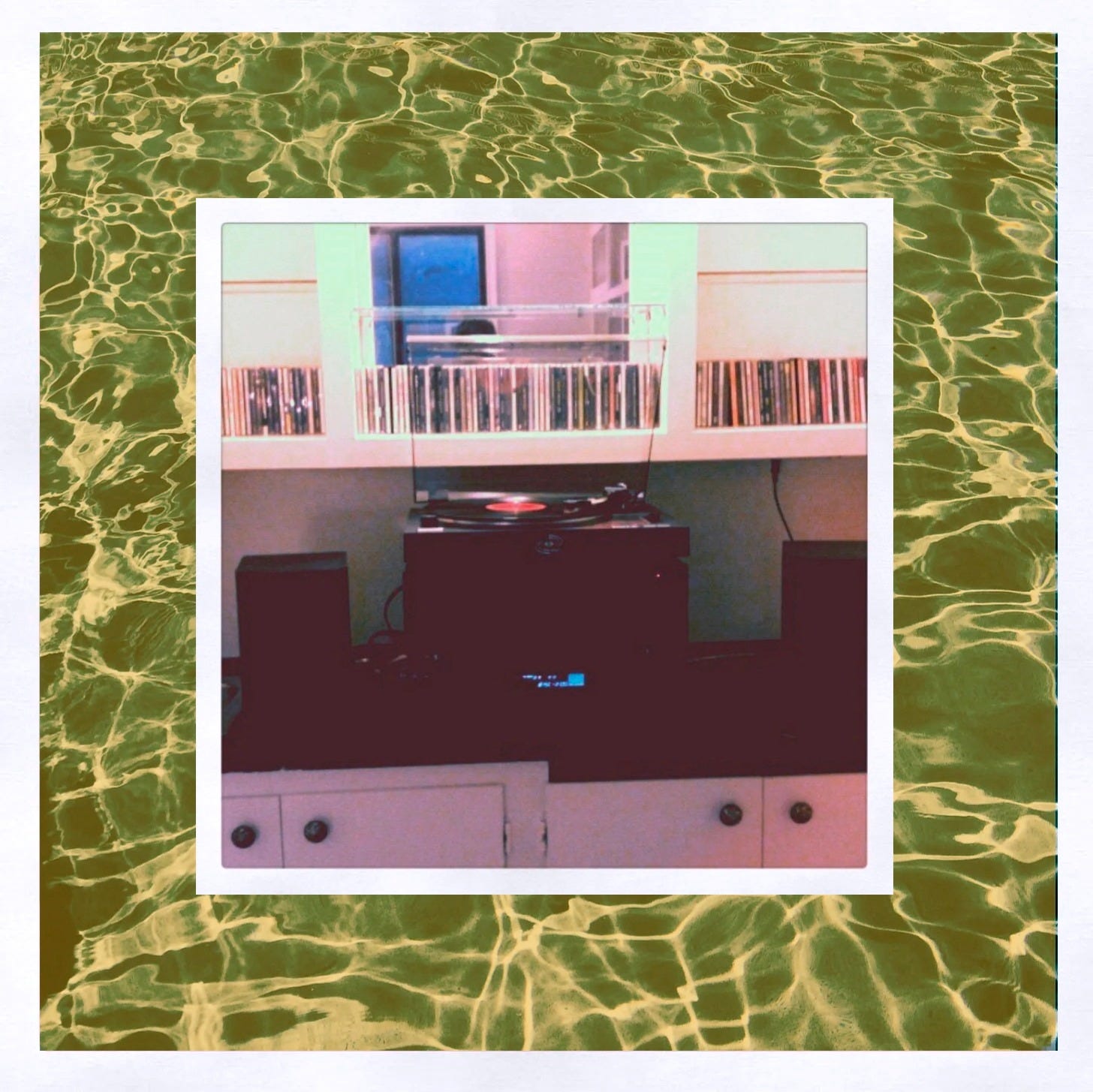
Our old stereo now lives in a 70s-style wet bar.
As I drag the chairs in from off the balcony and slam the screen door, my dad slides a remastered version of Led Zeppelin from its crisp new sleeve, placing it gently on the turntable.
I watch his hands as they remember the mechanics of the task, a past ritual.
It’s the summer of 2014 and Zeppelin’s septuagenarian guitar god Jimmy Page is in the process of remastering the band’s entire catalog from the original analog tapes.
Over the next few years, Page, who believed Zeppelin MP3s sounded “ridiculous,” will reissue new mixes on vinyl with original cover art and sleeve designs, as well as deluxe editions featuring live concert recordings from back in the day.
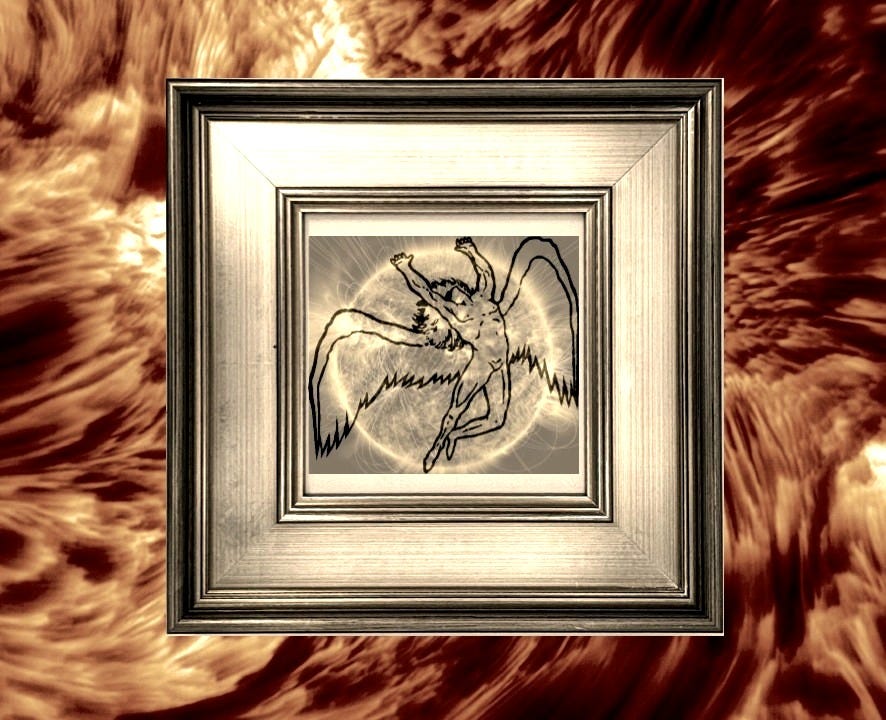
Like holographic Pokemon cards, these vinyl releases will all be marked with a small silver sticker depicting the mythological angel Icarus writhing in pain after he flew too close to the sun. It’s a symbol the band enacted in 1974 for their own record label, Swan Song Records.
By sending these refurbished recordings out into the world, Page is rehashing a vintage pastime. He’s stoking excitement in the aging hearts of OG fans (including his own), while also trying to bond with a new generation.
And, in a way, my dad’s doing the same.
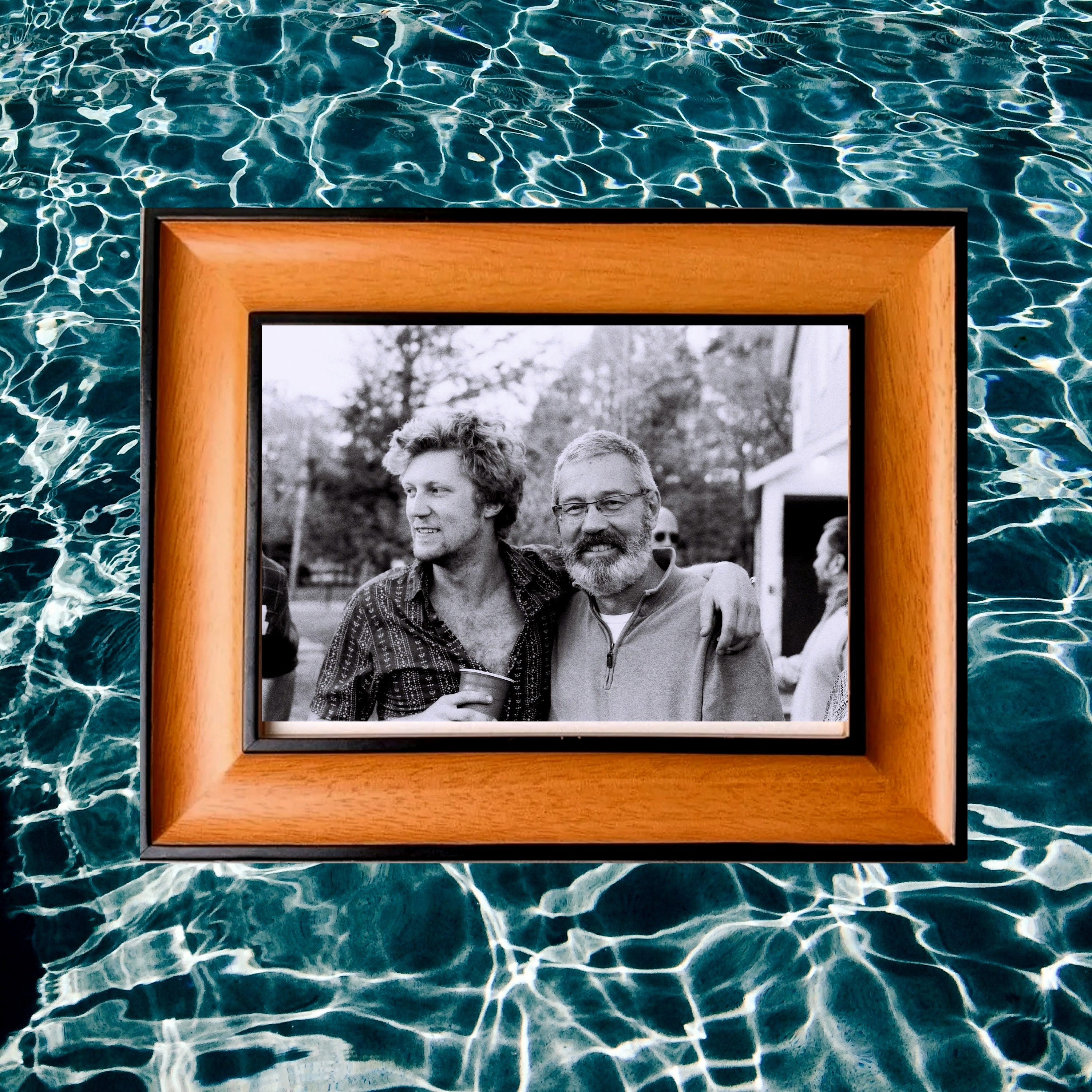
In the 1970s, my grandfather donated my dad’s record collection to the Salvation Army when he was away at college. Sometimes I dream of those albums drifting around out there in record stores and on other people’s shelves, maybe even on mine.
But now, for the first time in over 30 years, my dad is rebuilding his collection. This decision draws a direct link between the two of us, and essentially becomes a lifeline during a dark time.
I’m already a few years into collecting records, Zeppelin’s Houses of the Holy being my first.
Throughout the second half of high school I’d amassed a short stack of vinyl — old and new — which I lugged up to college in a transparent purple IKEA cubby covered in skate stickers and played for curious homesick freshman like myself.
By the time I was done with finals and prepping to move back home for the summer, I noticed that my collection had magically expanded. Random stops at local flea markets and thrift stores resulted in a row of multicolored spines running along the top of my dresser, bookended by the foot of my bed and my roommate’s microwave.
But while I was away at school, accumulating records, my parents were seven hours south finalizing their divorce, dividing up their belongings, and shedding nonessential possessions for open-houses and an imminent move.
Being back in my hometown without my home is strange.
My mom rented a room for us in a hotel across town where I live out of a suitcase and sleep on a pull-out couch. You could say I have a newfound appreciation for my old house, but unlike the “Overview Effect” that orbiting astronauts experience when viewing Earth from thousands of miles away, my emotions manifest in a desperate nostalgia that will ebb and flow for years.
If my dad is trying to lure me to his one-bedroom apartment with the new turntable he picked up from Best Buy, it’s working. And thank god. The most grounded I’ll feel all summer may be in front of this stereo, the two of us sharing a pizza from Harry’s, spinning records.
When the needle drops on Led Zeppelin, the speakers let out a warm nostalgic fuzz. My dad and I sink into our seats.
The patio chairs, which for years lived in my family’s backyard, are a crisscross of plastic strips that imprint Xs on our backs and thighs. Our bare feet sweat into the new wall-to-wall carpeting.
“Why don’t you go grab us a coupla beers?” he says, looking over at me.
I can’t tell if I hear correctly.
“Beers?”
“Yeah, there’s a case of Sam Summer in the fridge.”
I try to act cool, but this is a first for us. I’m still a few years from 21 and we’ve yet to crack the cap off the formative-father-son-drinking-together-experience.
“Sure thing, dawg.” (Sometimes we call each other dawg.)
As I make my way toward the kitchen, two power chords ring out through the brightly lit apartment. John Bonham’s drums build as Robert Plant’s banshee vocals emerge, high-pitched and defiant, ricocheting off the bare walls.
My father sings along from his chair.
In the dayyyys of my youth
I was told what it was to be a man
His voice is soft, low, and in tune, just like it was when I was a child. He used to sit on the edge of my bed and croon “I’ve Been Working On the Railroad” until I fell asleep.
Now I’ve reached the age
I’ve tried to do all those things the best I cannnnn…
Good times, bad times
You know I had my share
When my woman left home with a brown-eyed man…
The apartment still smells like the last tenant, an octogenarian smoker whose death made way for oatmeal-colored carpeting, fresh paint and the lingering scent of a well-used ashtray. I wonder if the people who moved into our house can smell us too.
To get to the kitchen, I have to pass the long oak table my parents and I used to sit at every night for dinner. My dad also has the game chest Mom picked up on a family trip, and the two cream-colored club chairs with olive stripes that used to face the television.
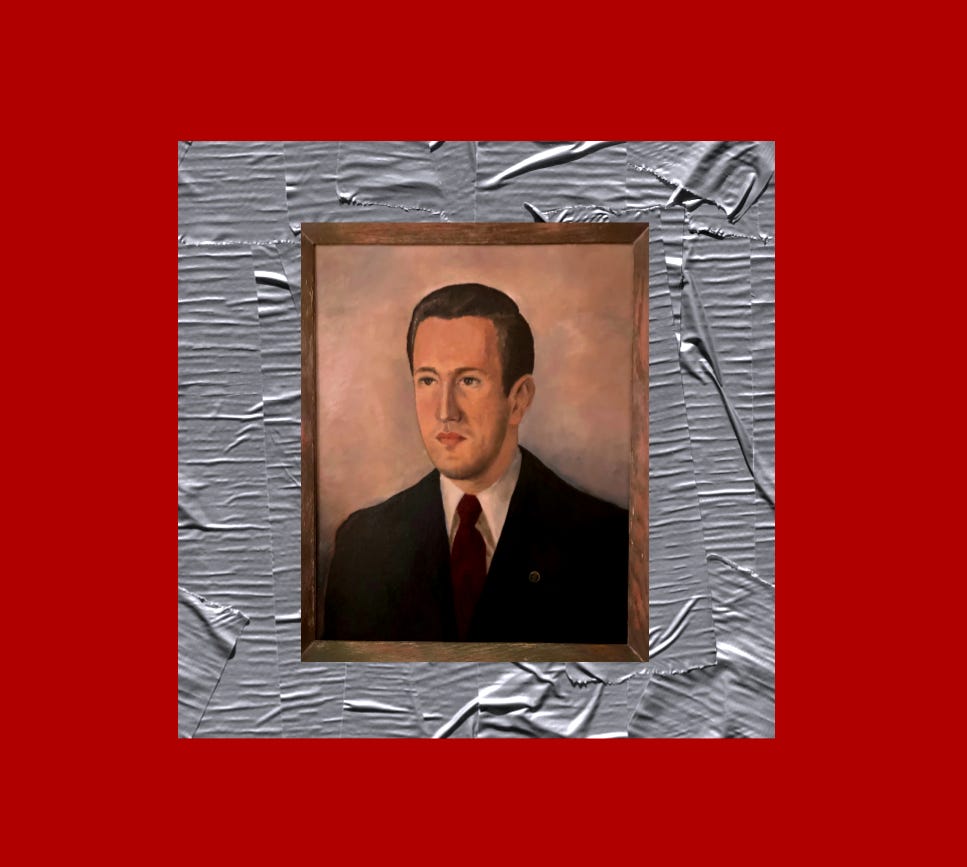
A framed portrait of my grandfather as a younger man leans up against the wall.
I stare at it. His pale-pink face is clean-shaven, his dark hair combed neatly and parted down the side. Clear, focused eyes. A mirror image of my dad when I was young. Some mornings before school, before the sun was up, I’d catch a glimpse of him in the hallway, glistening and professional and ready for work.
Dad stops singing, yells over the music. “Yo! Ya get lost?”
“One sec!”
The kitchen is a large empty room wrapped in metallic gift-wrap wallpaper, as if duct tape has been pulled taught and applied in perfect diagonals. The fridge purrs. I open the door and the amber bottles inside shimmer in the empty white light.
Aside from a case of beer, there’s nothing but condiments. A tube of French’s yellow mustard, Heinz ketchup, and a little thing of Tabasco with a red crust lining the crease in the cap.
When I was a kid and something was lost, my dad would tell me the same thing: Think back to when you last had it. Retrace your steps.
We would do it together, marching up and down the house in search of sunglasses and keys, CDs and action figures. And after a while, there it’d be, the missing object flattened beneath couch cushions or wedged deep within a jacket pocket, somehow still intact and back in my palm.
But this practical act of search-and-rescue no longer seems to work. I’m not interested in finding a lost object. I’m searching for a moment in time. A whole era that has tragically disappeared.
Until I left for college, it was my job to set the sonic tone for dinner. I’d sift through our family’s CD collection, located in a cabinet underneath the TV, and load a spontaneous assortment into the disc changer: Rom-com soundtracks, classic rock anthems, Red Hot Chili Peppers’ Greatest Hits, Haddaway’s “What Is Love” — the mix would drift out while we ate and chatted about our days.
Now I can’t remember when we’d divided up the hundreds of CDs. Packing up the house was a dizzy gray-blue blur. My stack now lives in the backseat of my car, I know that, and my dad’s assortment is displayed above the turntable in a neat row, drawing, for the first time, a clear distinction between what has always been his and what hasn’t.
Unfortunately, in my quest to reclaim a life that is melting away, a time when our belongings — the CDs, the speakers, the furniture — are all together under one roof, I’d found something that only beckons more questions.
Cracking the cap off our first father-son brewski, I can’t tell if I should bring it up. My discovery: two wads of cash. Crisp pale-green paper asphyxiated by thin rubber bands, stuffed into my dad’s sock drawer.
A historically predictable engineer, my dad has grown mysterious, forfeiting his 9pm bedtime for a nightlife I’ve imagined from the mattress set up against his living-room wall. One night, when nothing convincing materialized, I became squirrely and started opening drawers.
The bills felt like lead weights, hundreds lining the outside of each roll. Theories multiplied. Dad’s double lives.
But I still can’t figure out how to ask about the money and won’t for years to come. At this point, it all feels too exhausting. I want to know the truth, but I’m not ready to try.
So the two of us raise our bottles and cheers. To a new ritual. A temporary way of life.
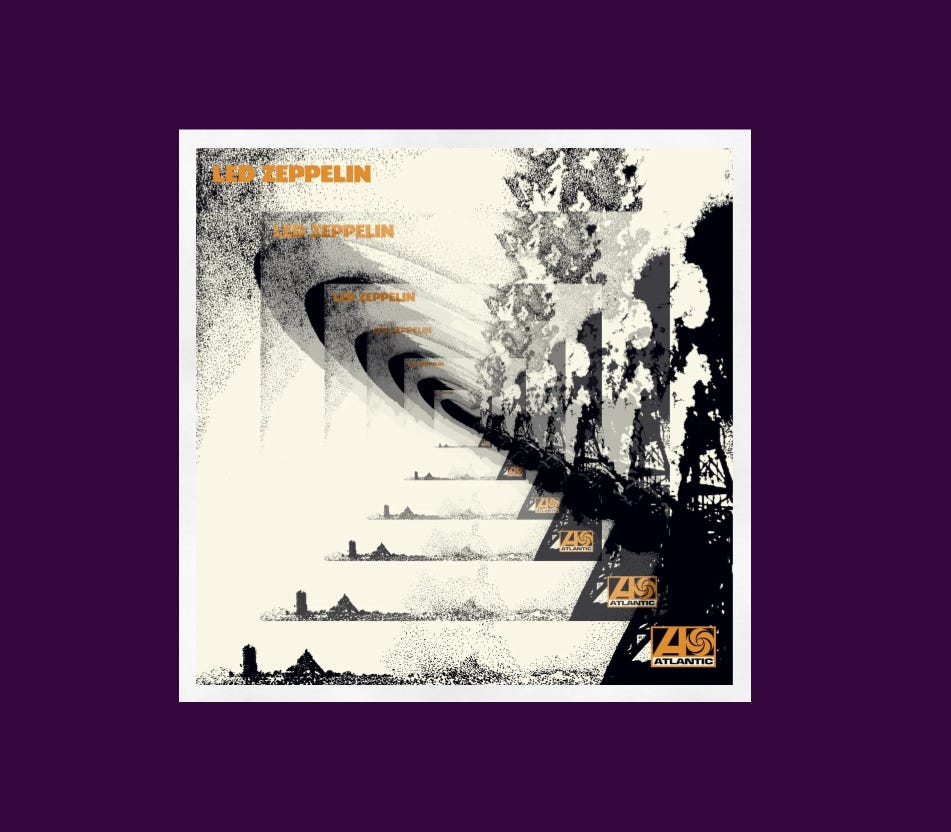
Seated in front of the record player, drinking slowly, we sing the final verse of “Good Times, Bad Times” in our heads (Sure do wish I was at home…) and fixate on the album cover — a doomed German blimp bursting into flames.
For the next 42 minutes, my dad and I enjoy ourselves, listening to the songs we already know.