

When throwing on an iconic concert record I can’t help but imagine myself in the crowd.
Smoking in the back of Nirvana’s Unplugged In New York show, as Kurt Cobain introduces his cover of a cover of a strange Christian tune. Or shooting a game of pool at Blaze Foley’s final Live at the Austin Outhouse set in 1989, days before his murder. Or gnawing on a turkey leg in the Winterland Ballroom while Martin Scorsese trails The Band and Aretha and Van and Joni and Muddy and Bob and both Neils on stage with a film camera.
Or I’m locked up, sentenced for a dime, singing along in a canvas jumper to the Man in Black, the Undertaker, Old Golden Throat as he bellows a song about shooting a man in Reno, just to watch him die.
Imagine walking out of Folsom State Prison at the end of a decade, sometime in ‘75 as a semi-changed man headed to the nearest record store, seeking out a professionally pressed sample of your past — At Folsom Prison — forever preserved on wax.


Thankfully, with the recent purchase of a new album — King Gizzard & The Lizard Wizard’s Live At Forest Hills ‘25 — I’m no longer reliant on my imagination; that dreamy post-show listening experience has become a tangible reality.
The release from the prolific Australian psych-rock-jazz-electro-metal-prog band contains three multicolored LPs with custom fluorescent dye jobs and grooves cut with sounds I had the ecstatic pleasure of experiencing live last August under the stars on a perfect summer night in Queens.
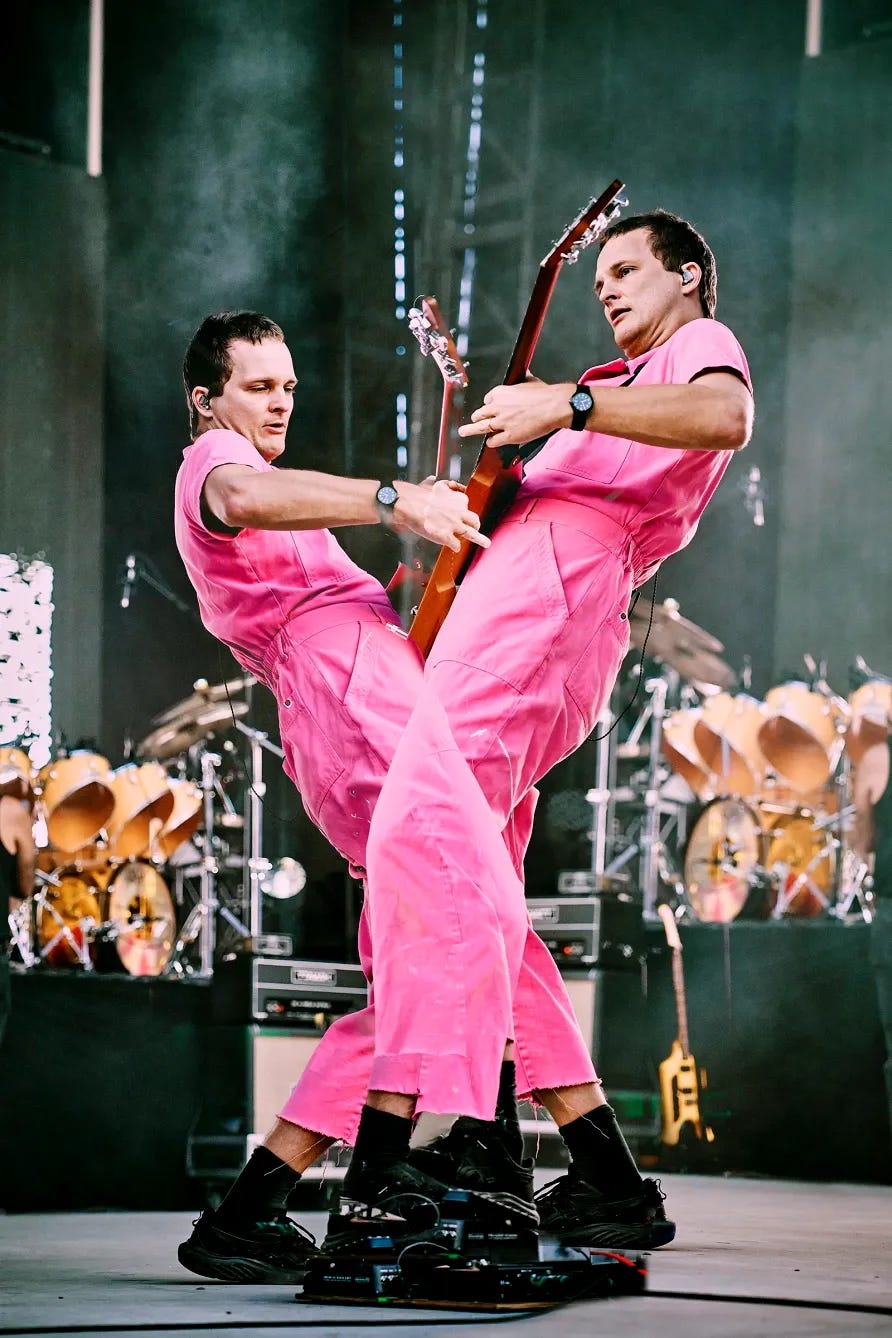
Peeling back the plastic wrap and opening up the record cover unveiled a triptych of the stadium. The stage and the crowd are photographed from the stands. It’s still light out. King Gizz is frozen in time. Ripping through their heavy-metal opener “Gaia,” with Stu McKenzie strumming his flying V in a bright pink onesie.
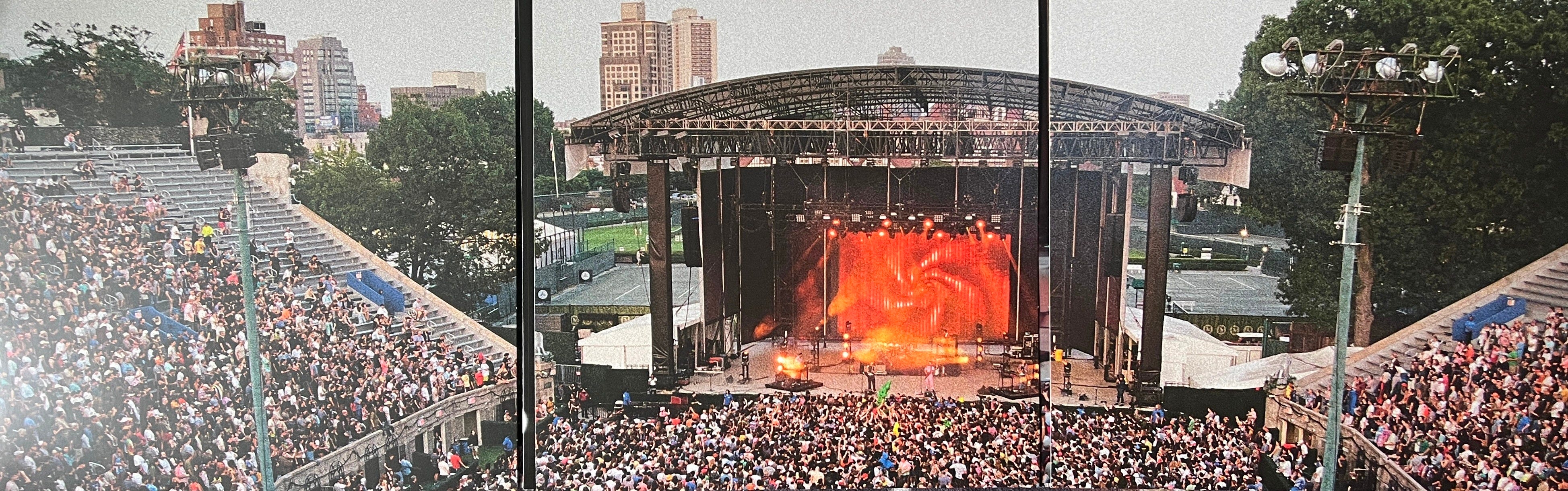
If you look closely at the triptych, you can even make out another universe hiding in the background. Forest Hills’ West Side Tennis Club, tucked back behind the stage, where tiny figures in tennis whites rally neon green specks across dozens of pristine grass courts.
Seeing the image now brings back memories of basking in the juxtaposition of that view: a grassy blue-blood wonderland bumping uglies with a rock show — tennis whites and dark metal; spin serves and double bass drum; sprinklers and smoke.
My friends and I were in awe, looking out from the stands at converging diverging atmospheres. Banging our oversized cans of Budweiser together like cartoon bar flies as the sun neared the horizon. I remember my thumb pressing into the side of the aluminum, making a dent in the can, and the crowd buzzing with anticipation.
On vinyl, Stu calls the Forest Hills stadium the bands’ “spiritual home” and the crowd (us) explodes with a 12-inch swirl of color spinning round and round.
I love knowing that somewhere in the mix are me and my friends. Dan, Kevin, Shoshi, Pat. Our screams and applause. Our drowned-out chatter. Our hearts thumping against our chests. The soles of our shoes shuffling and pounding against the concrete.
Then the band starts in on “Superbug,” a deathy doomtastic headbanger of a song and we roar.
“I’m gonna make this banana cry,” Joey Walker says from the stage, cheekily, into the mic, pulling Stu’s famed bright yellow guitar — the flying microtonal banana — over his head, readying his stance.
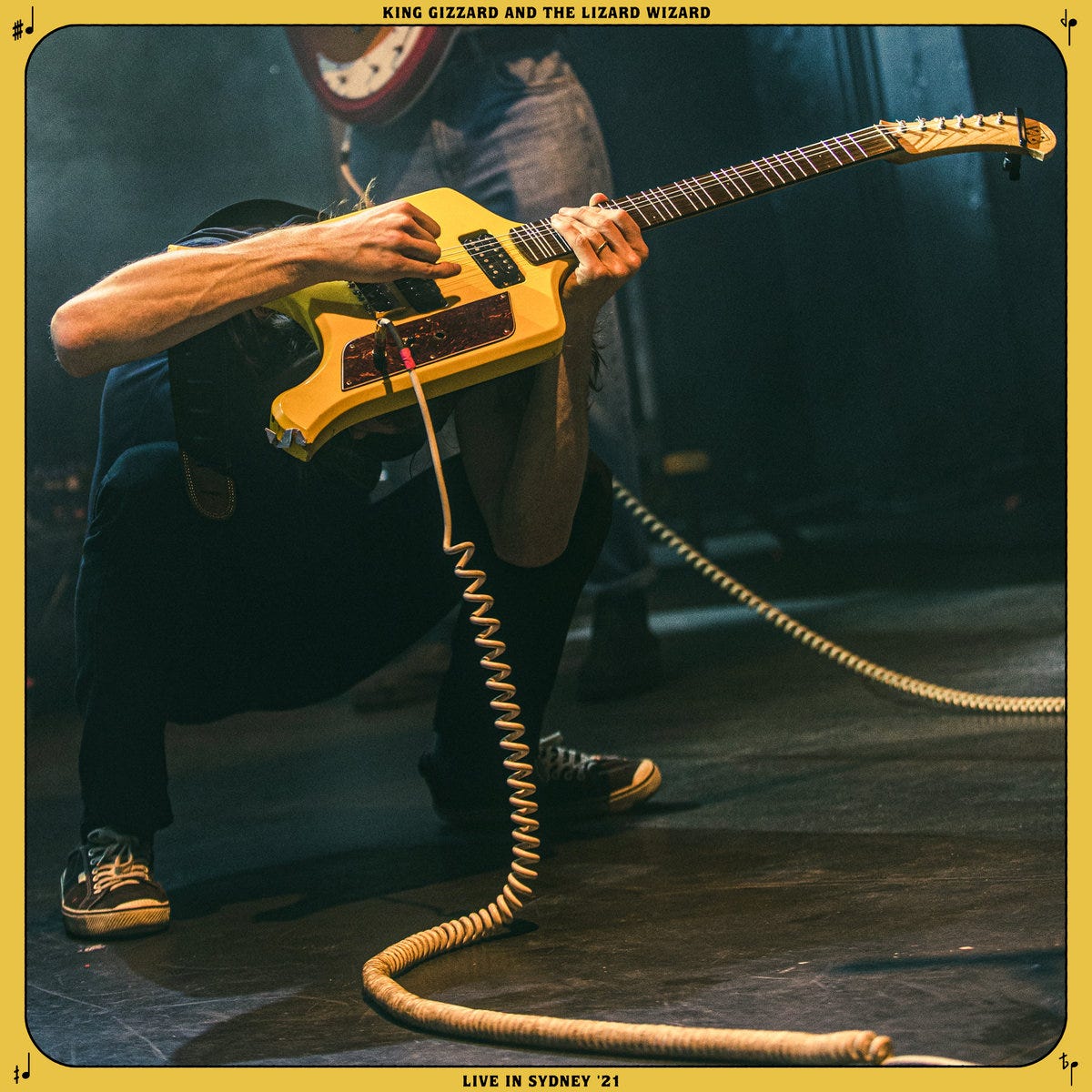
I don’t remember the band members’ commentary at all. It’s cool to hear it now, their words beckon other memories from the night.
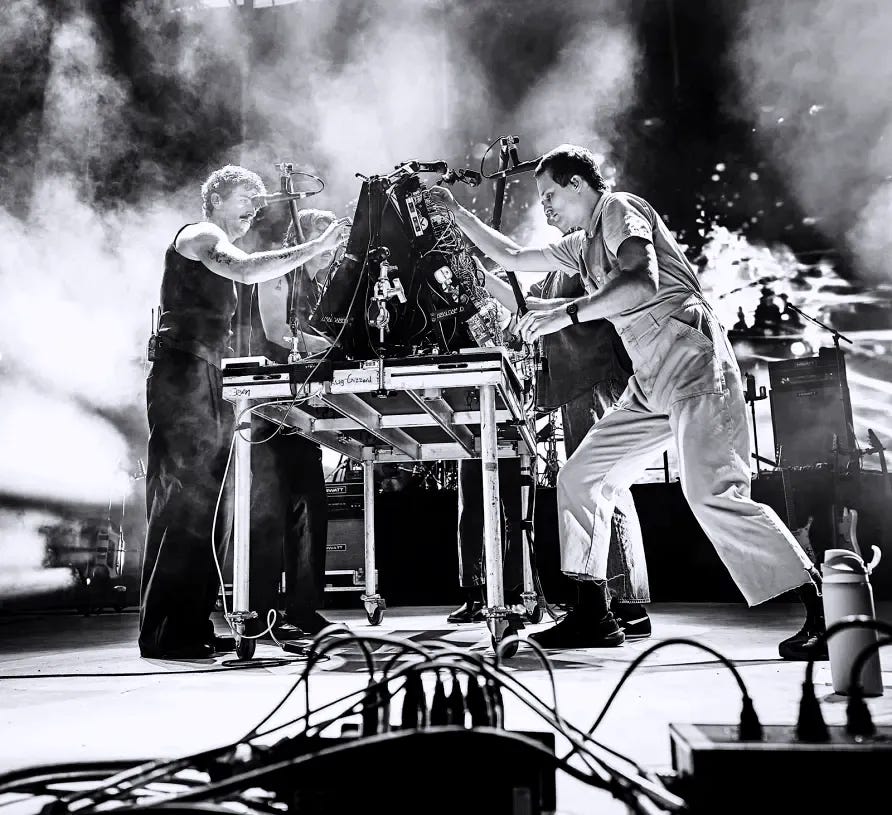
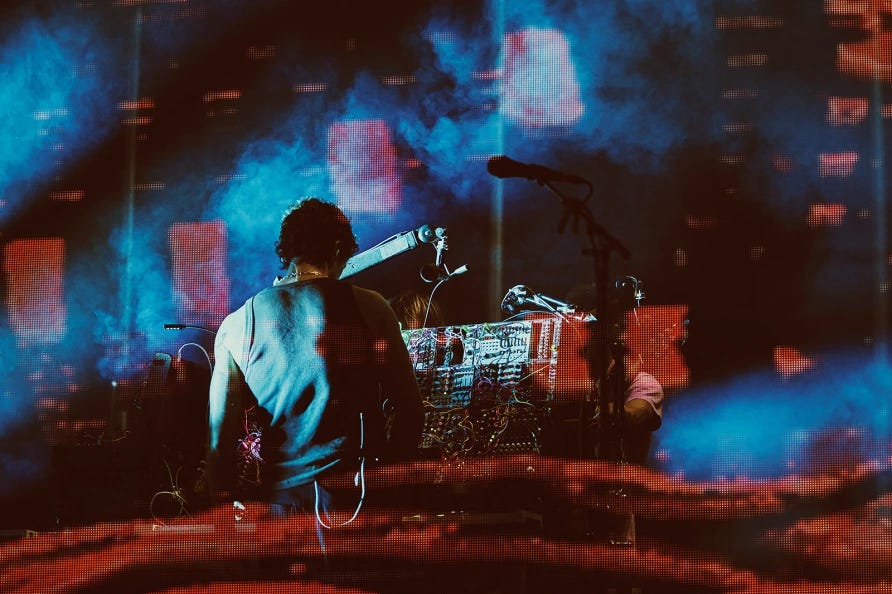
Like the sun eventually disappearing as the band made their way through an unexpected electronic mini-set, ushering in the darkness while surrounding a chaotic analog rave module. The vocals were auto-tuned. The light show stretched out over thousands of heads, everyone was bathed in a heavenly pale blue.
This record is a product of King Gizzard’s “Official Bootlegger” program that launched in the final hours of 2020, taking a “for the people” approach to licensing music by inviting “indie labels, bootleggers, fans, [and] weirdos” to press and sell masters of the band’s live recordings and demos for free.
“If anyone wants to release these albums, you’re free to do so,” the band wrote on their website at the time. “Below you’ll find links to audio master files and cover art. Feel free to get creative with it if you like — it’s yours.”
“Only deal is you’ve gotta send us some of them to sell on GIZZVERSE.COM — whatever you feel is a fair trade is cool with us,” they add.
“With the Bootlegger program, the idea is that you can download all the assets,” Mackenzie told SPIN. “You can change the artwork if you want to. You can mix and match songs from different shows. You can press tapes or vinyl or CDs. You just have to send us some to sell in our store. It’s amazing to see how creative people have been with it”
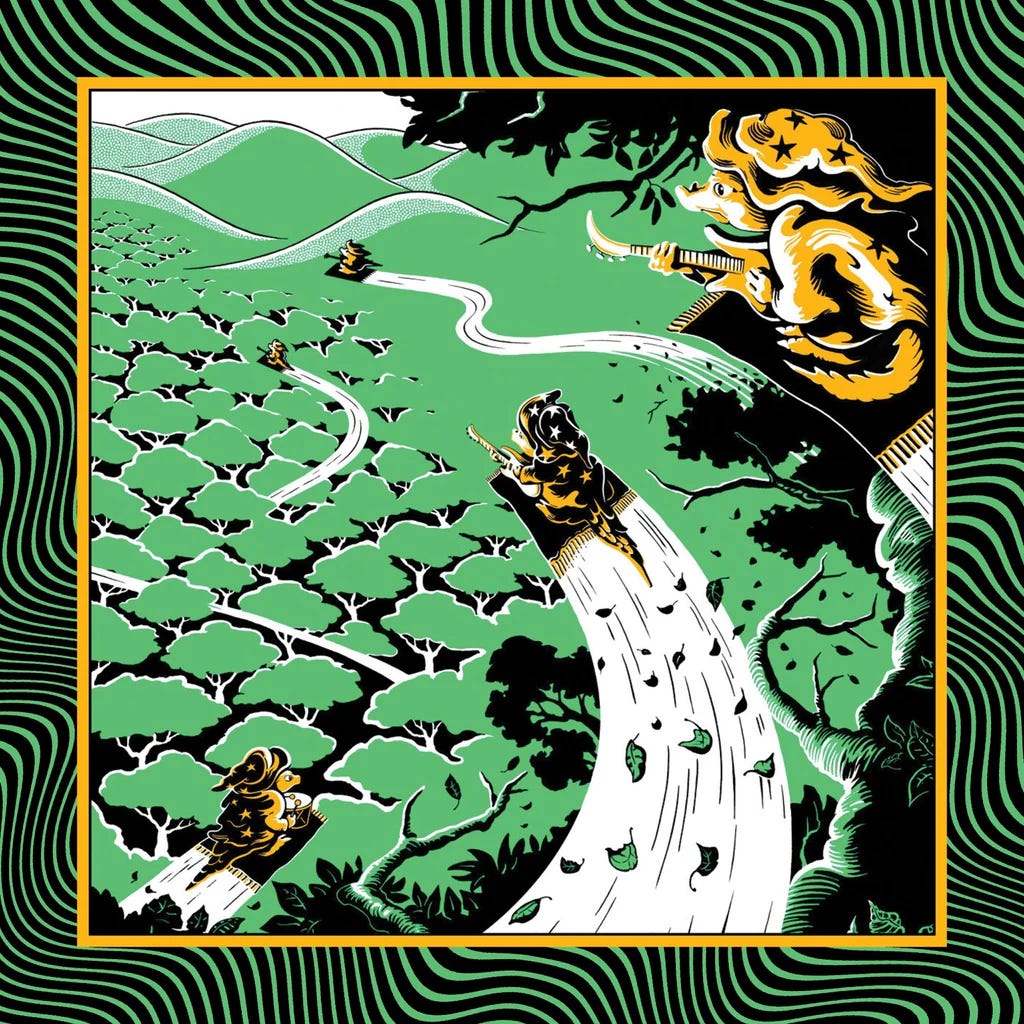
And the bootleg cover art is fantastic, in the most literal sense.


My friends who were there with me that night have had similar reactions to the process of revisiting the shows we’ve attended together on vinyl.
“As soon as ‘Gaia’ started playing I had the stupidest smile on my face,” my friend Kevin told me after he received his own copy of the Forest Hills ‘25 recording. “Transported me right back.”
“When I listen to bootlegs of shows I’ve attended, it does genuinely bring me back to that exact time and place,” another friend, Dan, told me.
“My most cherished live bootleg vinyl is King Gizzard & The Lizard Wizard at Forest Hills ’24. I remember the amazing weather and immaculate vibes at the stadium. The pit was a site to be seen with incredible coordination — at times I thought I was witnessing Game of Thronesesque reenactments.”
Dan says re-listening to these records only enriches his initial concert experience and helps inform his memory, “which is a hell of a drug in and of itself.”
In other words, if you’ve had the chance to attend any of the shows uploaded to King Gizz’s website, listening to these albums is like experiencing a welcome acid flashback.
Which is all too fitting, as the band’s Bootlegger program embraces a listening culture born from Deadheads in the 1960s, who were famously allowed to bring their own recording equipment to shows and capture entire tours on tape.
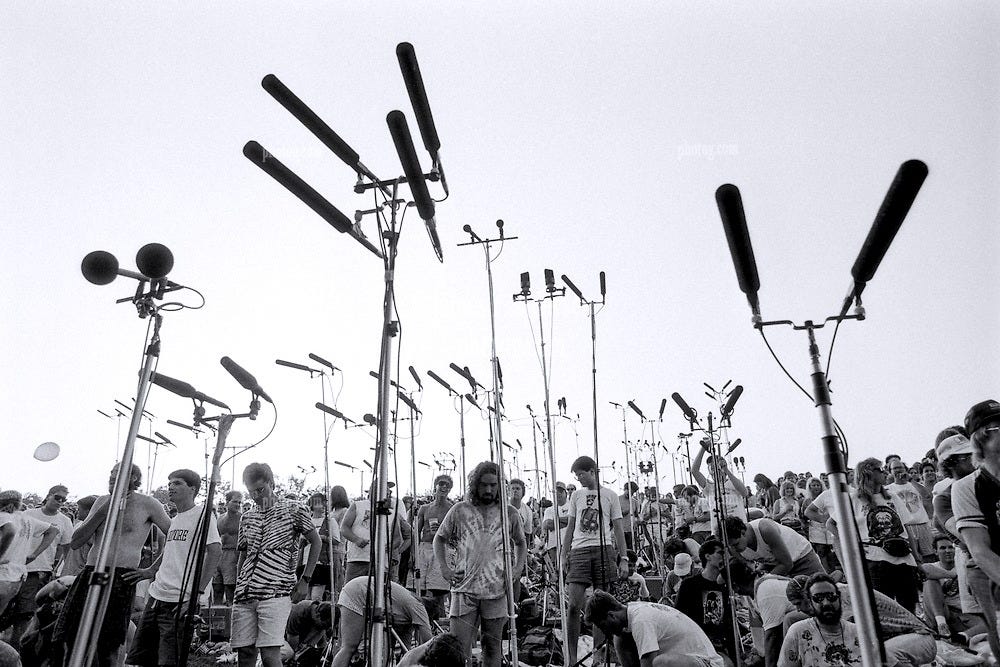
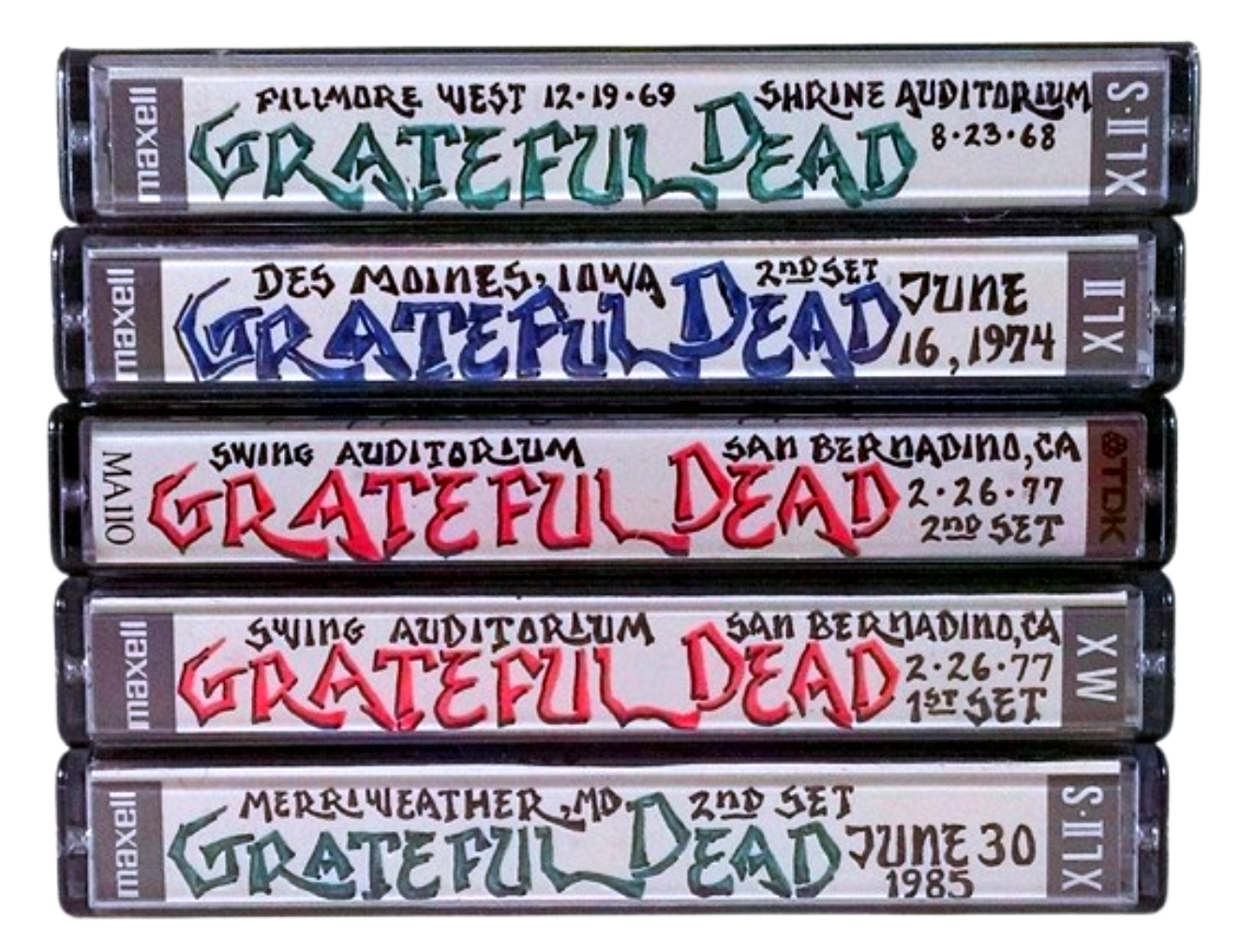
Over their 16-year career, King Gizzard & The Lizard Wizard have amassed more than 25 studio albums, over 40 bootleg records, and a die-hard following. Like the Dead or Phish, King Gizz never plays the same show twice, pulling from a catalog of original tunes that span a multitude of genres.
So it’s no surprise that the band’s most devoted fans follow them around the world, from show to show, eagerly awaiting some new magic. Slurping up more memories from a piping hot bowl of Gumboot Soup, memories they can always return to.
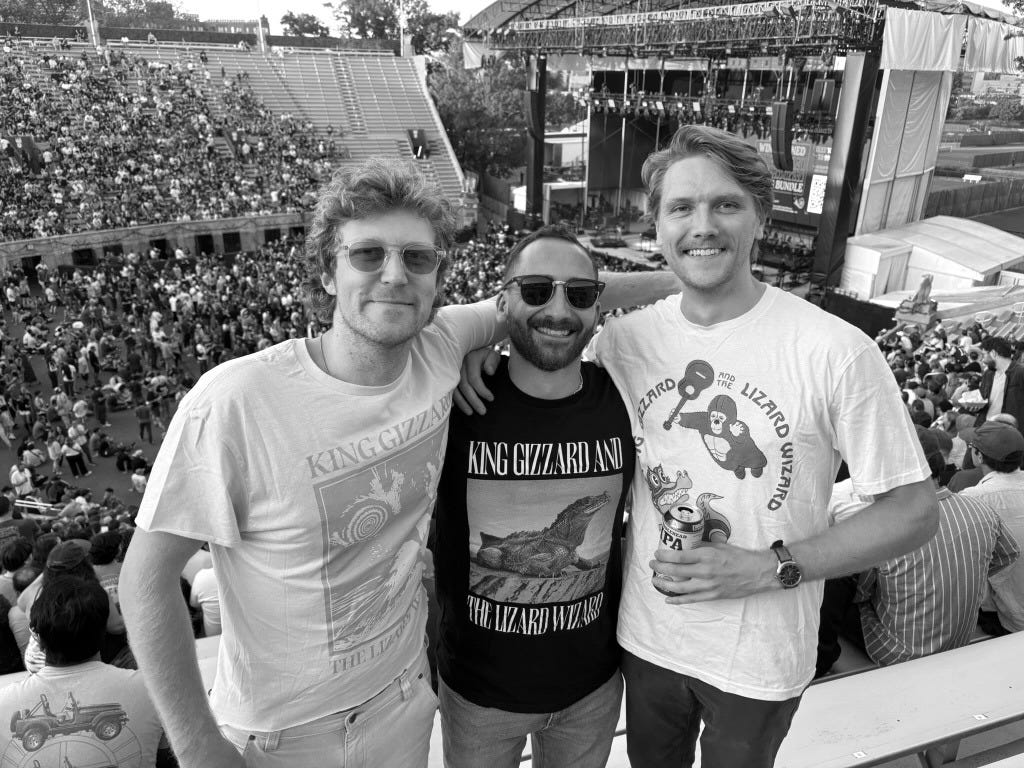
Here’s a full video recording of the Forest Hills concert we attended and the full album!
Beautifully written. The King Gizz Bootlegger program is one of the more genuinely radical things any major band has done for fan culture -- it flips the usual ownership model entirely. What's interesting about live recordings you attended is they function differently from regular bootlegs; they're less about documenting the artist and more about exteranlizing your own memory, so the crowd noize becomes almost more impotant than the music. I had a similar feeling revisiting a recording of a show I attended years back -- more disorienting than nostalgic.