


When the parcel came, Star’s skin was still caked in reddish-brown dust, scathed in sun blisters, her muscles shredded from several days in the wild. The result of one of her parents’ “Scavenger Hunts.” No tent. No tools. No company. Solo missions devised to teach their only daughter about the ones and twos of survival — the only real concept that mattered to the Chasers, engulfing life in Ghost Town like a five-alarm-fire.
Since her 10th birthday, Star has embarked on dozens of Scavenger Hunts, fully naive to the irony baked into the name. The clue-solving games other kids her age enjoy in manicured yards and bustling city blocks were so far off Star’s radar that she accepted her own outings as essential. Bloody, daring jaunts into a world claimed not by humans, but by the animals and insects and plant life that inhabited the land. All of whom were just as hungry and thirsty as the lonesome desert girl as she learned to adapt: Hiding in the shade of sea-chiseled canyons to escape the sun’s devilish glare. Collecting dried sticks and whittling them into spears with kill-sharp ends. Waking at dawn to salvage drinkable water by soaking up fresh dew from nearby rocks and plants, then squeezing the moisture over her cracked, desperate lips.
Star isn’t aware that this Scavenger Hunt will be her last. Though even if she knew this chapter of her life was about to end, it’s doubtful she would have the energy to conceptualize or celebrate. At least not now, teetering on the edge of a blackout.
Returning from the wild always instills the same response in Star; she’s eternally grateful to be alive, yet traumatized by what she’s experienced. A certain sense of celebration exists, folded into her one major accomplishment — making it back home in one piece — but the act of surviving bears a shadow of bewilderment that ends up cloaking everything. At least for as long as the memories reign supreme in her mind: Narrow canyon quicksand. Debilitating dehydration. Heat stroke. Paranoia. Food poisoning. Coyote attacks. Snake bites. Scorpion stings. Flash floods. Starvation. Lightning strikes. And other incidents much more difficult to explain.
By now, Star has experienced a fair share of pain, somehow always clawing her way back from death. For this, her parents are incredibly proud.
Typically, Scavenger Hunts end when Star rings the giant bell at the far western corner of Ghost Town, signaling to her parents that she’s returned home, that she has survived. Usually, the girl is so depleted that she’ll pull the dangling rope, hear the bell clang, and collapse. Later, she’ll wake in her bed, hooked up to an IV, her skin cleansed, her wounds patched, depending on the severity of her injuries. Her parents are always there, leaning over her, welcoming her back to reality. That’s what they call their remote compound, their doomsday bunker, their only child’s post-Odyssey bed-rests: “Reality.”
But Star knows no different. For as long as she can remember, she has considered this — all of it — the norm.
Now, though, as Star rings the giant bell, collapses to the ground and passes out, she wakes in the same spot, gasping for breath, destroyed by the still-burning sun. They didn’t come get her. They didn’t help. The weight of it presses into her weary bones, making it almost impossible to get up and march the remaining half-mile into Ghost Town. Where are they? She’s near-blackout. She has no choice but to follow her woozy sightline, dotted in sunspots, destined for water and shade, driven solely by her most basic instinct.
As Star limps toward town, lifting her legs one at a time, heavy as cement, she doesn’t know she’s being watched.
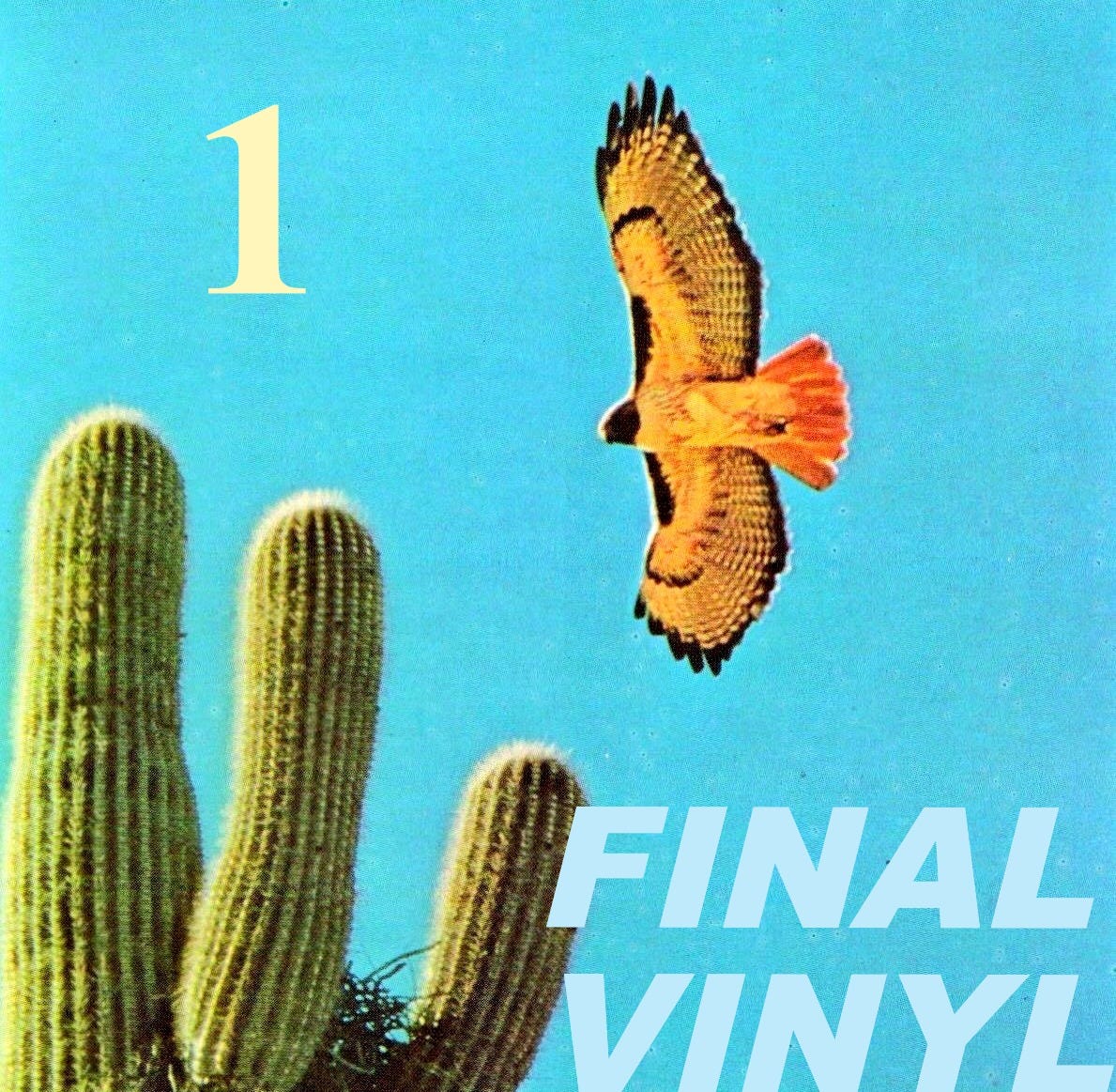
A falcon carves slow circles in the midday sun, about 100 feet above the lonely desert girl’s mop of tangled hair. The bird keeps tabs on her as she progresses like an injured tortoise down the dusty desert path, leaving behind zigzagging boot tracks in the sand. Star hasn’t clocked the giant bird. She’s delirious, she can barely see past her own toes. When her shin eventually bangs against the sharp edge of the rusted metal water pump she lets out a throaty cry.
The falcon is hungry. It’s difficult for him to see Star for anything but a meal, a pathetic creature on the edge of death. But its claws are occupied. The small leather envelope tied closed with a single white shoelace has been in its grips for miles. The bird knows this girl is the final destination, the purpose of its journey. Despite the girl’s inability to push the pump handle toward the earth, her feet sliding back, her toes digging into the dirt, the falcon — masterfully trained — resists transforming its feathered body into a 200mph projectile dead-set on the fleshy meat of Star’s exposed throat.
Gasping and grunting, Star soldiers on. Her muscles cramp violently. But she’s felt this exact pain before, she knows it intimately. A tainted reminder to tap into a power source she’s spent years cultivating; a supercharged resilience manifested from her time spent in the wild. Forging ahead, alone, just barely slipping past death; this has instilled in Star an undying willingness to live. If her parents can be thanked for anything, it would be for this.
She keeps pumping the handle until she hears a dim splash of water hit the bucket’s wooden base. And soon, the water starts to flow. Star does a slow push-up to her knees, leans her head back and begins drinking directly from the tap. Clear water runs over her face and down her neck, washing away a thick film of dirt and revealing the smooth, freckled skin of a young woman eager to be freed from the wild world she’d been forced to embrace. Under the falcon’s piercing gaze, the girl has transformed, exposing a vitality that almost intimidates the majestic bird.
Fueled by the coolness of the water, how it feels against her wind-burnt skin, Star waits for the bucket to fill, then shakily raises it up above her head, letting a waterfall wash over her scraggly straw-colored hair. It trickles down her chest, with each rivulet, each small stream racing toward her feet, filling her navel, careening around her inner thighs and into the damp pockets behind her rounded knees. A puddle forms in the earth and Star lays back into it, like a salamander cooling off in the desert after an unexpected storm.
Colors burst against Star’s eyelids as she manages to blindly raise her right arm enough to reach back, grasp the sloping handle and pump more water into the ground around her, expanding the puddle into a small pond. The falcon, still circling above, watches in envy, craving both a drink and a bath himself. He’s been waiting long enough to deliver the message. He’s now certain the girl will live. His talons open. The leather parcel drifts slowly downward as the falcon swoops around the nearby barn, setting its sights on Star’s self-made oasis. The parcel falls like a dead leaf on a windless day.
Star’s wits regenerate. Fresh water seeps into her pours. She forces her eyes open and snatches the parcel out of the air, just before it lands in the drenched dirt. Her reaction is animalistic. The falcon, looking on from his perch atop the barn’s weathervane — a circular hazard symbol lathed by Star’s father — is impressed. Now that he’s successfully completed his delivery, he’s ready to indulge. He lifts off, arching his speckled wings like two feathered boomerangs, and touches down on the metal pump, casting a wide shadow over Star’s freshly washed face.
The lonesome desert girl is paralyzed by the sudden presence of the bird and whatever she’s now grasping in her right hand. Is she hallucinating? The falcon’s eyes, perfect black circles ringed with yellow, remain fixed on hers. Its yellow toes are wrapped around the rusty edge of the spigot. The leather parcel burns a hole in Star’s palm, but she still can’t take her eyes off the falcon. It’s razor-sharp beak, its bright-yellow nostrils and long black talons, its elegant, spotted chest. Fear and wonder ricochet against her sternum.
But the falcon has no plan to attack Star. It spreads its tremendous pointed wings, expanding its shadow by at least three feet, and flaps erratically, landing at the edge of the water. Star flinches. Relief washes through her. She even hears herself giggle as the bird dips its beak into the pond and begins to drink. He’s just like me, she thinks, dirty and thirsty and craving.
The bird wades further into the water and shakes playfully, rinsing its feathered body, splashing Star as she tries to protect the thin leather parcel from getting wet.
“Did you bring this to me?” She asks the bird. “Did you come here for me?”
The falcon now ignores Star, continuing to clean itself in the cool water.
It’s time. Star uses her free hand to untie the shoelace and pop open the worn leather envelope. She pulls out a single translucent piece of onion paper. It takes a moment before she can focus her vision on the writing. Directly through the thin sheet of paper, Star sees the falcon, bent over, its beak dipped just below the waterline. She reads the message aloud:
Bird on the horizon, sittin’ on a fence
He’s singin’ his song for me
At his own expense
And I’m just like that bird
Oh, singin’ just for you
I hope that you can hear
Hear me singin’ through these tears
Its thirst quenched, its feathers cleaned, the falcon’s yellow-ringed eyes focus on the girl lying in the shrinking puddle, a piece of onion paper gripped tightly in her left hand. She’s been repeating herself, speaking the same noises over and over in a voice that’s deep and dry. The bird recognizes it, like the low howl of a sand storm riding miles of barren land. Not dissimilar from the voice of his master. Rhythmic. Slow. Calming. Familiar.
A field mouse emerges from a small hole in the corner of the barn door and without thinking, the falcon pushes from the wet dirt into a streamlined glide. For the first time in minutes, Star looks up from the words in her hand to see the powerful bird pounce on the tiny creature, driving its beak deep into the back of its neck. Like most of the kills Star has witnessed in the wild, this one happens in slow motion. She can hear the mouse’s vertebrae snap like a toothpick. She pinpoints the millisecond its pink kernel-sized feet go limp, and hears the ripping squish of the rodent’s insides being inhaled by her new friend.
As the falcon devours the body of the field mouse, Star can’t help but empathize with both parties, the attacker and the attacked, the predator and its prey. She knows what it means to be both things, sometimes all at once. It’s the future reality of humankind’s demise. The downfall of everyone but Star and her family. “They will devour themselves, and we will remain,” her dad likes to say. “They will perish and we will live. We will be free. We will rebuild.” These are words Star was raised on.
She has forgotten to question why her parents haven’t come to help her, to at least see that she’s alive. She’s too enamored with the bird, her aviary friend with a corpse pinned beneath its leathery yellow feet, ripping deeper into what was once a running, breathing thing. Finally, she feels strong enough to sit up, using the backside of her legs, fused into the mud, as a foundation on which to pull her torso toward her feet. She props herself up on her right elbow and reexamines the sheet of see-through paper.
The poem breathes life into Star. Someone is singing for her, crying for her, tracking her like a stray coyote tracks its pack at night, sniffing them out, snout to the brush, eager to return to the ones with whom she belongs. Who is singing just for me? Star wonders, running her thumb over the dried ink. With this cryptic note, Star suddenly feels less alone than she ever has before. She looks deep into the falcon’s eyes and asks the one question on her mind: “Who sent you?”
Thanks for reading.
Stay tuned for Chapter 2 — coming soon.